Is it safe to fly right now?
A destination-by-destination safety guide for UK holidaymakers, including what FCDO advice levels actually mean.
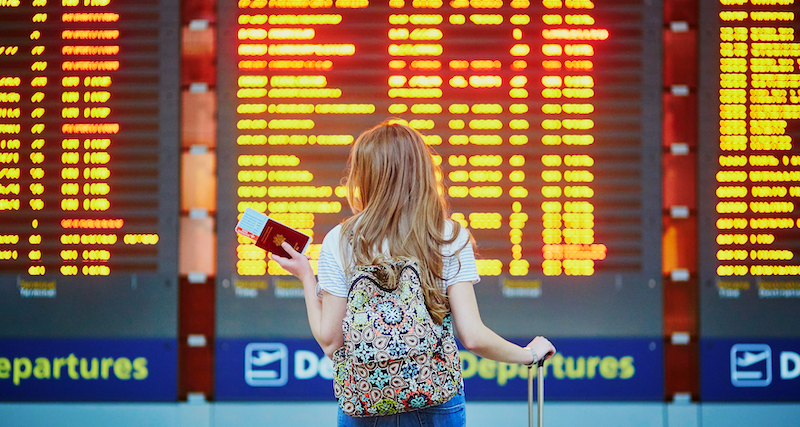
The short version: most holidays are still unaffected. But this is a fast-moving, five-month-old conflict that has recently escalated again, so here's the full picture : your rights, your costs, your options, and why there's still more reason to travel than you might think.
Short on time? Let us summarise this guide for you.
The conflict that began on 28 February 2026 has been through several phases: an initial war, a ceasefire from 8 April, a US-Iran memorandum of understanding in mid-June that reopened the Strait of Hormuz and eased travel advice across the Gulf, and then a fresh escalation from early July as that agreement broke down. The US has resumed strikes on Iran, and Iran has struck a US base in Bahrain and fired on Jordan. As things stand, the FCDO has not moved back to advising against travel to the UAE, Qatar, Bahrain, Kuwait, Oman or Saudi Arabia, but it has issued fresh regional-tension warnings for all of them, plus Jordan, Cyprus and Turkey, in the past week, and the position is changing quickly. Israel was removed from the FCDO's no-travel list in June, though longstanding restrictions remain near the Gaza, Lebanon and Syria borders. Lebanon remains subject to "do not travel" advice for large parts of the country, with a ceasefire framework that is holding only patchily. Iran itself remains a do-not-travel destination throughout. For the vast majority of UK holidaymakers, flying to Spain, Greece, Portugal, Turkey and other European destinations, travel continues to operate normally. UK law still gives you strong protections: package holiday bookers can claim a full refund if FCDO advice changes, flight cancellations entitle you to a refund or rerouting regardless of cause, and ATOL protects you if your tour operator fails. On costs, easyJet's and Ryanair's fuel hedging has held through the volatility, and neither airline has added surcharges to existing bookings, though both have reported sharply lower profits this quarter as unhedged fuel costs rose and fares were cut to support demand. Given how quickly things are moving again, check live FCDO advice before you travel rather than relying on this summary alone.
On 28 February 2026, the United States and Israel launched joint military strikes on Iran, killing Supreme Leader Ali Khamenei and triggering retaliatory missile and drone attacks across the wider Middle East region. Iran closed the Strait of Hormuz, and the conflict widened into a separate 2026 Lebanon war between Israel and Hezbollah. The fighting has killed thousands of people across the region, overwhelmingly in Iran and Lebanon, and displaced more than a million people in Lebanon alone.
A ceasefire between the US and Iran took hold from 8 April, mediated by Pakistan, and an Israel-Lebanon ceasefire followed on 16 April. Through the spring the situation stabilised gradually: a fuller US-Iran memorandum of understanding was signed on 17 June, extending the ceasefire, reopening the Strait of Hormuz and setting a 60-day window for a lasting settlement. The FCDO responded by lifting its advisory against all but essential travel to the UAE on 18 June, and eased its advice across several other Gulf and Levant destinations through the second half of June. Israel was removed from the FCDO's no-travel list on 3 June, and a further Lebanon framework agreement followed on 26 June.
That calmer period did not last. Through early and mid-July, the June memorandum effectively collapsed: the US resumed air strikes on Iran, reportedly for nine consecutive nights by 18 July, without direct Israeli involvement. Iran responded with a missile attack on a US base in Bahrain and strikes on Jordan, and on 24 July the US struck targets near Ahvaz in Iran. Iran rejected a further US ceasefire proposal on 23 July. In response, the FCDO has issued fresh regional-tension warnings over the past week for the UAE, Qatar, Bahrain, Kuwait, Oman, Saudi Arabia, Jordan, Cyprus and Turkey. None of these amount to a formal advisory against travel as things stand, but they warn of possible flight disruption, airspace closures and further attacks "without warning," and the position is changing day to day.
Here is the context that still matters most for holidaymakers: the conflict remains geographically specific, and Europe continues to be entirely unaffected from a travel safety perspective. The sun is still shining on the Costa del Sol. The Acropolis is still open. The Algarve is still beautiful. If your holiday is in Europe, and the overwhelming majority of UK package holidays are, your trip is almost certainly going ahead exactly as planned.
The exception, as before, is long-haul travel to Asia, Australasia and the Indian Subcontinent, much of which ordinarily routes through Gulf hubs. Travellers heading to those destinations may still face longer journey times, rerouting and connection uncertainty, even though their destination itself is not part of the conflict. See the note on Asia-Pacific travel below.
The UK's Foreign, Commonwealth & Development Office (FCDO) is the official source of travel advice, and right now it is genuinely volatile for several Gulf and Levant destinations, changing from one week to the next as the ceasefire breaks down and reforms. Treat everything below as a starting point only and check the live page immediately before you travel. Last checked: 29 July 2026. Check the live FCDO advice here.
Important: This list reflects FCDO advice at the date above, for a set of countries where that advice has changed multiple times in the past week alone. Always check gov.uk/foreign-travel-advice again close to your departure date, whichever destination you're checking, and bookmark it now.
If you're travelling to destinations that ordinarily connect through Dubai, Doha or Abu Dhabi, you may still experience disruption even though those destinations are not in a conflict zone. Airspace over Bahrain, Iran, Iraq, Jordan, Kuwait, Lebanon, Qatar, the UAE and the Gulf of Oman remains subject to enhanced risk guidance from Europe's aviation regulator, EASA, which has extended its Conflict Zone Information Bulletin to 31 August 2026. Countries whose flights commonly route via Middle East hubs, including Australia, India, Sri Lanka, Singapore, Thailand, the Philippines, South Korea, Japan and others across the Asia-Pacific region, may see rerouting, longer journey times or connection changes.
If your holiday destination is on this list, your trip may still go ahead, but check with your airline before travelling and build some flexibility into your onward connections.

This is where the reassuring news really starts, and it hasn't changed. UK law gives holidaymakers some of the strongest consumer protections in the world. Most people don't realise quite how well protected they are, so here's the plain-English version.
A package holiday, legally, is any booking that combines two or more travel services (flights, accommodation, car hire, tours) bought for one price from one provider. If that describes your booking, you have the most powerful protections available.
Under the Package Travel Regulations 2018, if the FCDO formally advises against travel to your destination before you depart, this almost certainly qualifies as what the law calls "unavoidable and extraordinary circumstances." That means you can cancel without paying any fees, and your operator must refund you in full, within 14 days. No vouchers. No credits. Cash back.
The golden rule: do not cancel before the FCDO advice changes. If you cancel early out of anxiety, you may lose your cancellation fee. Wait for official advice, then act.
Under UK261, the UK's version of the EU's passenger rights law, if your airline cancels your flight for any reason (including war or airspace closure), you're legally entitled to either a full refund of your ticket or an alternative flight to your destination. Your money doesn't disappear. You won't get the additional cash compensation payment on top (war counts as an "extraordinary circumstance" that exempts airlines from that), but your ticket cost is safe.
Regardless of why you're delayed, your airline must provide food and drinks while you wait, and, if you're delayed overnight, hotel accommodation and transport to it. Keep every receipt.
Every UK package holiday that includes a flight must by law be ATOL-protected. Your ATOL certificate, which should be in your original booking confirmation, is your safety net. If your operator fails, the Civil Aviation Authority will either arrange for you to complete your holiday or issue a full refund. Check your confirmation now and keep it somewhere easy to find.
Section 75 of the Consumer Credit Act makes your credit card company jointly liable for any purchase between £100 and £30,000. If something goes wrong with a booking you made on a credit card, you have an additional route to a refund, even for independently booked flights and hotels that fall outside package holiday protection.

Since jet fuel accounts for a large share of an airline's operating costs, the Strait of Hormuz disruption has mattered a great deal to airlines' finances this year, though perhaps not quite in the way early coverage expected. Here's where things actually landed.
European jet fuel prices did spike sharply during the worst of the disruption, at one point trading above $150 a barrel unhedged and well over double pre-crisis levels. That pushed real financial pain onto airlines: easyJet's profit for the April-to-June quarter fell around 70% year on year, and Ryanair's fell 34%, both driven by higher unhedged fuel costs. But the pain didn't translate into higher fares for passengers; if anything, the opposite happened. Faced with "consumer hesitancy" about flying near a conflict zone, both airlines cut fares to keep demand up. Ryanair's average fare fell 6% year on year over the same period.
The hedging that protected easyJet and Ryanair through the spring has continued to hold: Ryanair has around 80% of its fuel needs to March 2027 locked in at roughly $67 a barrel, and even added to that hedge, at $85 a barrel, during a dip in prices around the ceasefire. easyJet has similarly kept the bulk of its fuel needs hedged. Neither airline has added a surcharge to tickets already booked.
Earlier in the crisis, European airports warned of a possible "systemic jet fuel shortage" if the Strait of Hormuz stayed closed, and some carriers, including Lufthansa, cut flight schedules as a precaution. In the event, stockpiles, rerouted supply and demand destruction from higher prices meant Europe avoided the sharpest feared shortages, though the UK was flagged by analysts as one of the more exposed markets given its reliance on Hormuz-routed imports. With the Strait's status now uncertain again following July's escalation, it's worth watching this space rather than assuming the risk has fully passed.
If your holiday routes through Dubai or Doha, the picture remains more complicated than short-haul Europe. Emirates is operating normally, but British Airways remains suspended on its Dubai route, now targeting a 25 October restart having already pushed the date back once. Long-haul rerouting via alternative hubs continues to add time and, in some cases, cost for travellers in this category.
Your price is fixed. Airlines cannot add fuel surcharges to tickets already purchased, and easyJet has publicly confirmed it will not do so. Whatever you paid is what you pay.

If you were booked to travel to the Middle East, or you simply feel more comfortable choosing somewhere clearly unaffected, there are some genuinely outstanding alternatives, and five months on, they're proving just as good a pivot as they were in the spring.
The obvious pivot is to popular Mediterranean destinations: Spain, Greece, Portugal, Turkey. These are all operating normally. But here's a thought worth having: with the conflict now in its fifth month, plenty of other travellers have already made exactly the same pivot, which means Ibiza, Santorini and the Algarve could be busier, and pricier, than usual this summer.
The smartest move is to go one step further. Destinations that are excellent but haven't appeared on everyone else's instinctive substitute list include:

Whether you have an existing booking or you're thinking about making one, here is everything you need to do, and in the right order.

Travel is resilient, because travel is important to so many of us. After every major disruption in living memory, from 9/11 to the 2003 Iraq War, the Arab Spring, the financial crisis and COVID, the industry has recovered, routes have reopened, and people have continued to enjoy their holidays. Five months into this conflict, that pattern is largely holding for UK travellers too, even with this month's fresh escalation.
The vast majority of UK holidaymakers this year will travel to their destination, enjoy their break, and return home without a single disruption caused by this conflict. The information in this guide is designed to make sure that if you are one of the smaller number affected, you're not caught off guard. You have rights, you have protections, and you have excellent options.
We'll keep this page updated as the situation develops. If you have a specific question about your booking, the guides linked above go into much more detail, and our team is always on hand to help.



The Holiday Extras app gives you instant access to your bookings, updates, and support—anytime, anywhere.

Sign up to our mailing list for more travel advice plus exclusive money-saving offers on your holiday extras!
No need to worry about your data, we take your privacy seriously.

