6 places to go to avoid EES
Here are 6 brilliant destinations where you can avoid EES entirely
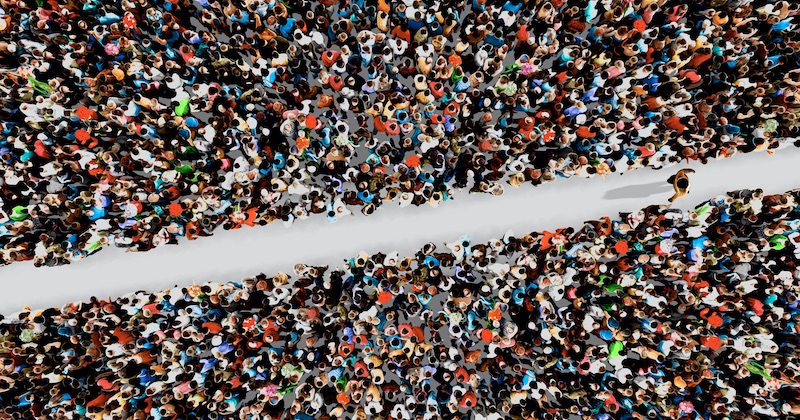

The EU's temporary "safety valve" for EES formally expired on 6 September, but at least nine countries are reported to have quietly been given informal permission to keep pausing checks anyway, with no deadline set. Here's what's changed, and how to stay ahead of it.
Short on time? Let us summarise this guide for you.
EES has been fully live, in law, since 10 April 2026, and the formal EU-wide flexibility that let border staff pause biometric checks during busy periods expired on schedule on 6 September. But a Sunday Times report from 13 September says at least nine countries, France, Belgium, Germany, Italy, Portugal, the Netherlands, Greece, Malta and Switzerland, have separately been given informal permission by the European Commission to keep pausing checks with no deadline set, so enforcement right now is patchy rather than uniformly strict. The tips that make the biggest practical difference are: travel carry-on only and sit near the front of the plane; time your flight to avoid peak landing windows; download the pre-registration app; and go straight to passport control once you're through security, duty-free and coffee can wait. Critically: fast-track security lanes do not speed up passport control. Also worth knowing: if a queue looks like it might make you miss your flight, photograph it with a clock visible and ask airport staff about priority lanes for imminent departures.
EES went fully live, in law, across all 29 Schengen countries on 10 April 2026, and as feared, the summer rush brought real pain. UK holidaymakers now have to submit fingerprints and a facial scan when entering the Schengen area for the first time. It's a one-time registration, so future trips are faster, but millions of people are still going through that first registration. At some airports that's meant two-to-four-hour waits, and flights have departed with passengers still in the queue.
Until 6 September, there was a formal safety valve: border staff could temporarily suspend biometric checks if a crossing became dangerously congested. That valve closed on schedule, but reporting since 13 September suggests at least nine countries have quietly been allowed to keep doing something similar anyway, informally and with no deadline. Here's what you need to know to stay ahead of it either way.
The simplest fix is to choose a destination outside the Schengen area entirely. Within about four hours from a UK airport: Ireland (EU membership, permanent Schengen opt-out), Cyprus (Mediterranean sun, outside Schengen for now), Turkey (similar coastlines to Greece, zero EU bureaucracy), and Albania (the Adriatic's most underrated destination). Further afield, Egypt, Cabo Verde and Azerbaijan are all completely unaffected.
It might sound like a compromise. For most of these destinations, it really isn't.

The big story of the EES roll-out this year was Greece loudly breaking ranks, and Portugal quietly doing something very similar, to let queues through without using the biometric machines when things got too busy.
Greece trumpeted a complete exemption for UK travellers. Then it rowed back on that bold declaration, admitting it was obliged to use the same border controls as everyone else. Even so, border officials in Greece in particular have continued to apply considerable discretion to keep queues moving. And it turns out Greece isn't alone: reporting since 13 September suggests Greece, Portugal and seven other countries, France, Belgium, Germany, Italy, the Netherlands, Malta and Switzerland, have quietly been given informal permission by the European Commission to keep pausing checks with no deadline attached, even after the formal EU-wide mechanism expired on 6 September. That's not a published policy you can rely on for a specific date, but for now, Greece and Portugal still look like they're on the more forgiving end of things.

Whether you hit a queue when you arrive in Europe is mainly a function of how many flights from the UK are landing with you, and with enforcement currently patchy from airport to airport, that arithmetic still matters more than it used to. So we've built a queue-tracker that tells you how long you'll be waiting.
It calculates how many other flights are landing at the same airport and how long that'll leave you queueing. So why not check before you book whether there's a hassle-free version of your flight a few hours earlier or later? Or, if you've already booked, see whether you need to leave extra time.
Visit QueueIQ to check your estmated wait times.
The two-hour rule was already unreliable at busy Schengen airports. The formal flexibility mechanism has now expired, though nine countries are reported to be informally still pausing checks in places, so you genuinely can't predict on a given day whether your airport is running full biometric checks or something lighter. EES biometric registration is a first-time-only process, but it takes meaningfully longer than a passport stamp, and when a bank of flights arrives at the same time and most passengers need first-time registration, processing times can extend sharply if full checks are in force. For busy hubs in Spain, France, Italy and Portugal, four hours before departure is the sensible buffer to assume. It sounds like a lot. Having it means a longer-than-expected queue is an inconvenience rather than a crisis.
Timing your flight to avoid peak landing windows helps too. Early morning arrivals consistently see shorter queues at most Spanish and Portuguese airports than mid-afternoon, when multiple services from the UK tend to land in quick succession. A quick check of what else lands around the same time as your flight at your destination can point you towards a quieter slot.
One thing that many people don't realise: airlines can't hold flights for passengers still in the immigration queue. Flight crews operate under strict legal duty-hour limits, which means that if a queue runs long enough, a flight may depart without everyone on board, not a policy choice, a legal requirement. It has already happened. Build your buffer accordingly.
Paid fast-track options at airports (priority security, fast-pass lanes) speed up the security screening process. They do not cover passport control. Once you're through security, everyone joins the same immigration queue, and whatever mix of full or lighter checks happens to be running that day, that queue is the one place fast-track can't help you.
So: Fast-track will get you to the other side of security faster, and means you don't have to spend as long at the airport. But it won't speed up the EES / passport queue itself. Once you're through security, don't stop for coffee, don't browse duty-free, don't linger at the gate. All of that can wait until you're on the other side of the border. Every minute between clearing security and joining the passport queue is a minute the queue is growing ahead of you.

This combination is more effective than it sounds. Travelling with carry-on luggage only removes the check-in queue, the baggage drop and the baggage reclaim. You walk off the plane and head straight to passport control. Add a seat near the front of the cabin and you could be at the border booth five to ten minutes ahead of the majority of your fellow passengers, before the queue builds properly.
Not always practical for longer trips or larger families, but for a long weekend or a city break it's genuinely one of the best moves available to you right now.
Also worth having ready at the booth: your accommodation address and return flight details, easily accessible on your phone. Border officers can ask where you're staying and how long you're visiting. Anything that keeps your interaction moving quickly helps, for you and for everyone behind you.
The EU's Frontex-backed app, search "Travel to Europe" on iOS or Android, lets you enter your passport details and, at some airports, upload a facial image before you arrive at the border. It doesn't let you skip the queue, but it reduces the time you spend at the kiosk once you're in it.
Uptake has been low so far, which is actually useful: the people who have pre-registered move through faster than those who haven't. Ten minutes at home could save half an hour at the airport. Check the official government website of your destination 48 hours before you travel, some countries have their own version of this tool in addition to the EU app.
If you can see the queue is running dangerously long relative to your departure time, there are a few things worth doing immediately. Take a photograph of the queue with an airport clock or departure board visible in the background, this creates a timestamped record you may need later for an insurance or compensation claim. Ask an airport staff member whether a priority lane exists for passengers with imminent departures; some airports have introduced these during the rollout. Keep every receipt for anything you spend as a result of the delay, food, water, emergency accommodation, as these may be claimable.
EES applies on departure from the Schengen area too, not just arrival. Build the same time buffer for your return journey, and don't book flights that leave no margin if the queue runs long on the way home.
Until 6 September, there was a real formal safety valve: under the EES regulation, border authorities could temporarily suspend biometric collection at a crossing if congestion became severe. That provision expired on schedule, 330 days after EES went live, despite sustained lobbying from IATA, ABTA, Ryanair and other airline groups, and a joint request from nine countries, to extend it into autumn. The European Commission held firm on that formal deadline.
But a Sunday Times report published 13 September says at least nine Schengen countries, France, Belgium, Germany, Italy, Portugal, the Netherlands, Greece, Malta and Switzerland, have separately told the Commission they won't enforce EES checks in full until the technology and systems are working properly, and have informally been allowed to keep pausing checks with no time limit apparently in place. That's not the same as the formal mechanism being extended: it's an unpublished, informal arrangement, so it isn't something you can plan a trip around with any confidence, and it could stop at a given airport without notice. Irish passport holders remain exempt from EES itself but can still be funnelled into the same queues as everyone else.
There is one small piece of good news for cross-Channel travellers: technical problems with the fingerprinting kiosks at Eurotunnel, the Port of Dover and Eurostar's London St Pancras terminal mean those routes aren't yet enforcing the tightened rules in practice. That's unlikely to last, so don't rely on it.
The practical upshot: treat every one of the tips above as still worth following, not less important just because enforcement has turned out patchier than expected. Build in more time, travel light, get to passport control fast, and don't assume a quiet queue on one day means a quiet queue on the next, there's still no guarantee either way at a given airport on a given day.
The last thing worth keeping in mind: EES registration is supposed to be a one-time process. Once your biometric data is in the system, future Schengen trips will be noticeably quicker. The queues are worst right now because millions of people are still going through that first registration, and because enforcement is currently a patchwork rather than a single consistent rule. It's a messier autumn than we'd hoped for, but it's entirely manageable if you go in prepared.



The Holiday Extras app gives you instant access to your bookings, updates, and support—anytime, anywhere.

Sign up to our mailing list for more travel advice plus exclusive money-saving offers on your holiday extras!
No need to worry about your data, we take your privacy seriously.

