Lapland travel guide
Go on an adventure north of the Arctic Circle where reindeer roam wild and the Northern Lights illuminate the sky…
Forget snowmen and Santa Claus! Discover the world's most bizarre and unexpected Christmas traditions, from Krampus and cobwebs to KFC.
Short on time? Let us summarise this guide for you.
This guide explores some of the world's most unusual and fascinating Christmas traditions, from Austria's fearsome Krampus parades and Ukraine's shimmering spider-web trees to Japan's Christmas Eve KFC feast and Venezuela's roller-skate mass. Across Europe and beyond, it uncovers the folklore, legends and quirky customs behind everything from Finland's festive saunas and the Netherlands' shoe-by-the-fire ritual to Iceland's giant Yule Cat, South Africa's Christmas caterpillars and Sweden's beloved Donald Duck broadcast. It even looks at the Christmas pickle, a "German" tradition that most Germans have never heard of. Finishing with New Zealand's iconic pohutukawa Christmas tree, it's a whirlwind look at how wildly different and wonderfully creative festive celebrations can be around the world.

British kids are well acquainted with Father Christmas, Santa Claus or Saint Nick, but will find something a little more sinister lurking around Austria. That's because it's here that a ghoulish creature called 'Krampus', the evil accomplice of St Nicholas, is said to wander the streets in search of badly behaved children.
During December, and especially around 5 December, you can expect to see terrifying masked figures out and about scaring kids and adults alike with ghastly pranks. If this holiday tradition sounds like your kind of thing, be sure to check out a Krampus run such as the ones held in Vienna.

One of Ukraine's favourite festive traditions is not one for those with a fear of creepy crawlies! Where we would have baubles, tinsel and stars, Ukrainians use decorations that mimic the natural formation of spider webs shimmering with dew.
The tradition goes back to a folktale about a poor widow who could not afford to decorate a tree for her children. Legend has it that spiders in the house took pity on the family, and spun beautiful webs all over the tree, which the children awoke to find on Christmas morning. Spider webs are also considered to be lucky in Ukrainian culture.

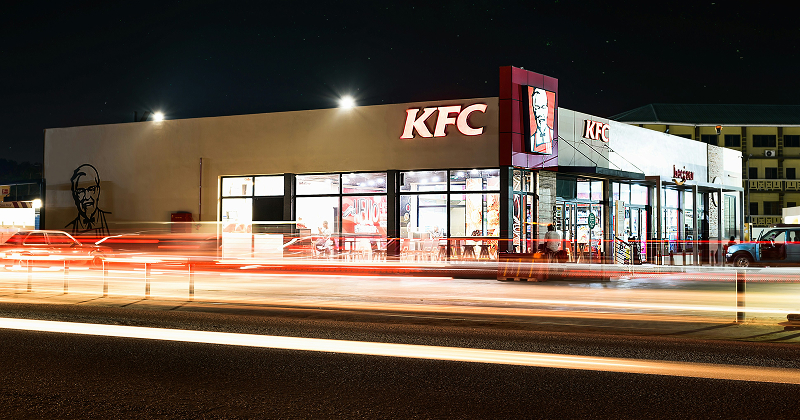
Back in 1974, the American fast food restaurant KFC released a festive marketing campaign in Japan. The seemingly simple slogan 'Kurisumasu ni wa kentakkii!' (Kentucky for Christmas!) spawned a national tradition that still thrives to this day.
Although Christmas isn't a national holiday in Japan, families from all over the country head to their local KFC for a special Christmas Eve meal.

The Christmas tree tradition embraced around the world today is believed to have started in Germany back in the 16th century, so you might expect our continental cousins to have some unique customs relating to the festive conifers. One that is often attributed to them is hiding a glass pickle somewhere within the branches of the tree and giving a gift to whichever child in the household finds it.
There is a catch. A 2016 YouGov survey found that 91 per cent of Germans had never heard of the tradition, and only 2 per cent actually hang a pickle on their tree. One likely explanation is a clever bit of American marketing in the late 1800s, when shops were selling imported glass ornaments. Another legend says the pickle recalls the story of St Nicholas rescuing boys who were held captive in a pickle barrel. Either way, a pickle on the Christmas tree is a tradition we can totally get behind.

In the Venezuelan capital of Caracas, swathes of city-dwellers make their way to early morning mass on roller skates every year from 16 to 24 December. The tradition is now so well established that many of the city's streets are closed to traffic until 8am, so that the skating congregation can get to church safely.
Legend has it that children will go to bed with a lace or string tied around their toe and the other end dangling from the window, so that passing skaters can wake them up with a friendly tug.

Many homes in Finland come equipped with their own sauna, and at Christmas time this cosy spot becomes a sacred space associated with long dead ancestors. On Christmas Eve, it's customary to take a long and respectful stint in the sauna, which is also believed to be home to the legendary sauna 'elf'.
After the sauna session, Finns head out to the evening celebrations, while the spirits of those ancestors take their place in the bubbling water.


Every year in the weeks leading up to 5 December, Dutch children eagerly place their shoes by the fire in the hopes that Sinterklaas will fill them with small gifts and treats in the night. Traditionally, carrots are left in the shoes for Sinterklaas' faithful steed, a white horse named Amerigo.
In the olden days, naughty children would receive a potato in lieu of gifts, but potato punishment is no longer considered an appropriate scare tactic.

Forget Santa and 25th December when in Italy, as all the action takes place on the eve of Epiphany, the night of 5th January.
According to folklore, an old woman named Befana visits all the children of Italy to fill their stockings with candy and leave them presents if they've been good. Just like Father Christmas, Befana enters through the chimney and is left treats by the children who live there, typically wine and local delicacies.

One of the more unique festive traditions we've heard of comes from Iceland, where a giant cat is said to roam the snowy countryside at Christmas time. Traditionally, farmers would use the Yule Cat as an incentive for their workers. Those who worked hard would receive a new set of clothes, but those who didn't would be devoured by the gigantic cat-like beast.
Today it is customary for everyone in Iceland to get new clothing for Christmas to avoid an unsavoury demise.

When you think of Christmas food, mince pies and turkey are often high on the list. In South Africa, however, some families also tuck into creepy crawlies, with deep fried emperor moth caterpillars served as a festive delicacy.
These aren't just the run-of-the-mill variety you find in the garden. The pine tree emperor moth caterpillar is even nicknamed the Christmas caterpillar thanks to its very festive colouring, although it is the mopane worm that is the better known edible variety.

According to Norwegian folklore, Christmas Eve is the day when mischievous spirits and witches take to the skies for mischief and general tomfoolery. As witches often use brooms as their preferred mode of transportation, it's tradition for Norwegian families to hide away any sweeping sticks where the witches won't be able to find them.
That video is a 1958 Disney Christmas special called 'From All of Us to All of You', which is known in Sweden as 'Kalle Anka och hans vänner önskar God Jul' or 'Donald Duck and his friends wish you a Merry Christmas'. Every Christmas Eve, families around Sweden gather around the television at 3pm sharp to watch it.
Everything on Christmas Eve is planned around the television special, and around a third of Sweden's population still tunes in like clockwork, with more than 3 million viewers in 2024. The tradition dates back to around 1960, when televisions were a new commodity in Sweden and there was only a single channel. It may be a quirky tradition, but a whole nation coming together to watch Christmas cartoons together is about as festive as it gets.

Thought all Christmas trees were created equal? Think again. The Kiwis are all about the pohutukawa, a beautiful tree that is native to New Zealand with gnarled roots and bright crimson flowers.
The first known published reference to the pohutukawa as a 'Christmas tree' came in 1857. In 1867 the Austrian geologist Ferdinand von Hochstetter noted that settlers were decorating their churches and homes with its brightly coloured branches at Christmas.
Today, the pohutukawa tree is a recognised symbol of Christmas around New Zealand and is featured on Christmas cards, decorations, and even in the Christmas carols that children sing at school.


The Holiday Extras app gives you instant access to your bookings, updates, and support—anytime, anywhere.

Sign up to our mailing list for more travel advice plus exclusive money-saving offers on your holiday extras!
No need to worry about your data, we take your privacy seriously.

