Top destinations for 2027
Our top 20 picks, including Uruguary and Chile


Stargazing is one of the simple pleasures of travel. Get out of the city and head somewhere remote, and you're likely to see stars you don't normally experience. We've enjoyed the stars from the top of Mount Teide in Tenerife, from dark sand beaches in Iceland and from Sri Lanka temples before dawn, and we definitely recommend it.
You can enjoy dark skies, and certainly darker skies than you may be used to over any UK city, from almost anywhere. But a handful of destinations have been specially designated Dark Sky Parks or Reserves by DarkSky International (formerly the International Dark-Sky Association), and these are often the very best spots for stargazing. Many of them hold festivals throughout the year, so here's our pick of the best spots around the world, and some of the best times to enjoy the dark skies.
The North York Moors and the Yorkshire Dales are both International Dark Sky Reserves, and every February half term they team up for a joint Dark Skies Festival. This year's ran from 13 February to 1 March, and the festival returns each February, so expect the next one early in 2027.
There is plenty to do outside the festival too. The North York Moors has a new observatory, the Dark Skies Station at Danby Lodge National Park Centre, and it holds a Dark Skies Fringe Festival in the autumn, which this year runs from 23 October to 1 November. You can find the latest events on the North York Moors Dark Skies pages.
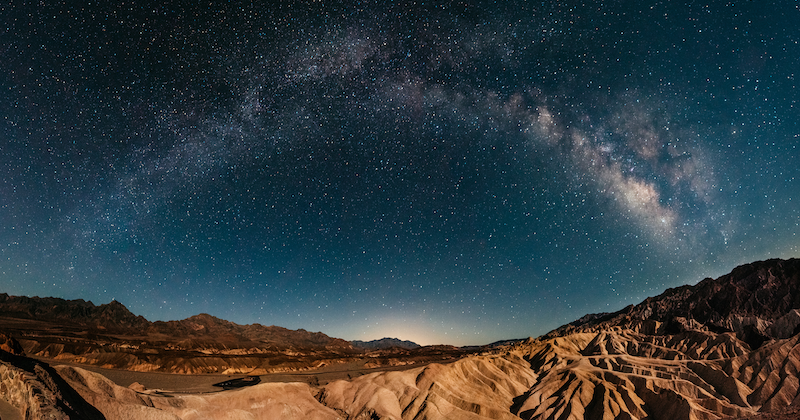
Best known for cooking eggs on bare rocks and for holding the highest air temperature ever recorded on Earth, Death Valley is pleasantly mild on winter nights and a great place to see the stars.
Death Valley National Park is a Gold Tier Dark Sky Park, which is the highest rating of darkness. Its annual Dark Sky Festival is a collaboration between the park, SETI, NASA and various Californian scientific institutions, with ranger talks, telescope viewings and astrophotography meet-ups. The 2026 festival ran from 6 to 8 February, so check the park website for next year's dates.
The South Downs became an International Dark Sky Reserve in 2016, and every February the national park holds its own Dark Skies Festival. One of the highlights is a stargazing pod journey on the Brighton i360, the giant glass pod on the seafront that rises 450 feet above the city.
Where better to see the stars than 450 feet closer? The stargazing journeys have included a talk from Dark Skies expert Dan Oakley, and this year the festival also held a free star party on the seafront in front of the i360. Dates for next year's festival are yet to be announced.
International Dark Sky Week runs from 5 to 11 April in 2027, timed around the new moon when the sky is at its darkest. Parks and reserves around the world hold events to mark it, which makes it a good excuse to plan a trip to one of the places on this list or to find a dark sky place closer to home. You can find out more from DarkSky International.

NamibRand became Africa's first International Dark Sky Reserve in 2012 and holds Gold Tier status, the highest rating of darkness. Guides on the Tok-Tokkie trails are trained in astronomy and tell you how to get the best view of the constellations and planets, and Kwessie Dunes Lodge has dedicated open-air stargazing rooms. You can find out more about the reserve at NamibRand Nature Reserve.
Les Nuits du Causse Noir is a stargazing festival held every summer in the Cévennes National Park in southern France. The park became an International Dark Sky Reserve in 2018 and is the largest in Europe, so it makes a spectacular setting for a summer trip under the stars.
If you want to enjoy the stars somewhere seriously remote, Jasper is the spot for you. The Jasper Dark Sky Festival runs from 16 to 25 October this year, so there is still time to book, and it takes place deep in the Canadian Rockies in one of the world's largest accessible Dark Sky Preserves. Expect stargazing, a speaker series, live music and a drone show.
Jasper sits a long way north of the ski resort of Banff. Most visitors fly into Edmonton or Calgary and then drive, take the bus or, our choice, take the train through the mountains.
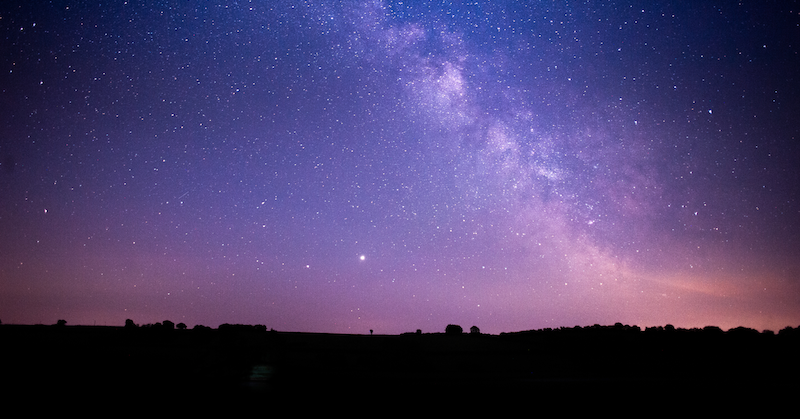
Wrapping up the dark skies season is the Exmoor Dark Skies Festival, which runs from 16 October to 1 November this year and celebrates its 10th anniversary with more than 70 events. Exmoor is Europe's first International Dark Sky Reserve, spanning Somerset and Devon, and the programme includes stargazing evenings, nocturnal wildlife walks and talks from astronomers.


The Holiday Extras app gives you instant access to your bookings, updates, and support—anytime, anywhere.

Sign up to our mailing list for more travel advice plus exclusive money-saving offers on your holiday extras!
No need to worry about your data, we take your privacy seriously.

