Ten destinations where the good times are getting better
Which countries have made the most meaningful ethical progress over five years? Some of the results are surprising — and some are genuinely inspiring.

The Good Trips Index has now tracked 183 countries across five years. For the first time, we've dug into what the trends actually mean — and some of the results are more complicated than they look.
Short on time? Let us summarise this guide for you.
Holiday Extras has analysed five years of Good Trips Index data to separate genuine ethical climbers from countries that have improved their scores through selective progress. Ten destinations earn recognition as true improvers. Seven are flagged as 'false risers' — countries whose headline gains mask poor records on rights and freedoms. And seven destinations have deteriorated significantly since 2022, including Mali, which has fallen 83 places.
Not every country climbing the ethical travel rankings is doing so for the right reasons. That's the central finding of a special five-year analysis published today by Holiday Extras, alongside the 2026 Good Trips Index — the UK's most comprehensive ranking of ethical travel destinations, now in its fifth year.
For the first time, we've looked beyond the headline numbers to sort the world's biggest movers into three distinct groups: genuine climbers making broad, verifiable ethical progress; false risers whose improved scores hide deeply troubling realities; and a warning list of destinations that have gone backwards since the index launched in 2022.
Five years of data gives you something a single year never can — the ability to tell the difference between a trend and a blip, and between genuine progress and a number that doesn't survive scrutiny. Some of the biggest climbers this year are countries that have made real, meaningful improvements to the lives of their residents. Others have gamed a composite index by investing in sustainability while leaving press freedom, LGBT+ rights and democracy untouched. Travellers deserve to know the difference.
These ten destinations have risen significantly in the Good Trips Index over five years. Their improvements are broad-based, verifiable and driven by real policy and social change — not narrow metric gains.
 Poland ranks 29th
The most politically significant climber in the entire index. The 2023 change of government triggered measurable improvements in LGBT+ rights, women's freedoms and democratic institutions, reversing years of backsliding.
 South Korea ranks 34th
A steady, consistent improver across democracy, women's rights and sustainability. South Korea is the strongest performer in East Asia after Japan.
 Japan ranks 24th
Slow but broad-based improvement across sustainability, quality of life and women's equality. Japan is the only G7 nation consistently climbing the index.
 Cabo Verde ranks 48th
The standout performer in Africa over five years. Strong press freedom, a consistent democratic record and improving sustainability credentials make Cabo Verde a destination that genuinely earns its place near the top of its region.
 Brazil ranks 49th
The replacement of Jair Bolsonaro's government with Luiz Inácio Lula da Silva's administration in 2023 produced measurable improvements across democracy, LGBT+ rights and environmental policy. It's one of the most dramatic political reversals reflected in any index ranking over five years.
 Thailand ranks 59th
Thailand became the first Southeast Asian country to legalise equal marriage — a concrete, historic legislative milestone that drives a significant improvement in its human rights score. Combined with strong sustainability credentials, Thailand's rise is one of the most clear-cut in the index.
 Sri Lanka ranks 96th
Sri Lanka has made a significant recovery across multiple metrics following the political and economic crisis of 2022, with improvements in democracy, press freedom and quality of life. Over five years, it's a story of genuine resilience.
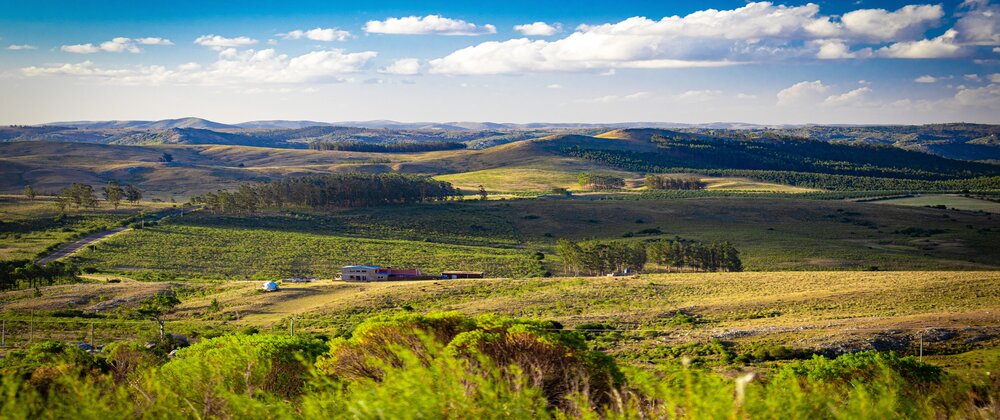 Uruguay ranks 32nd
Consistently strong on LGBT+ rights, democracy and women's freedoms — and improving across all three over the five-year period. Uruguay is South America's most reliable ethical travel destination and one of the highest-ranked countries in the southern hemisphere.
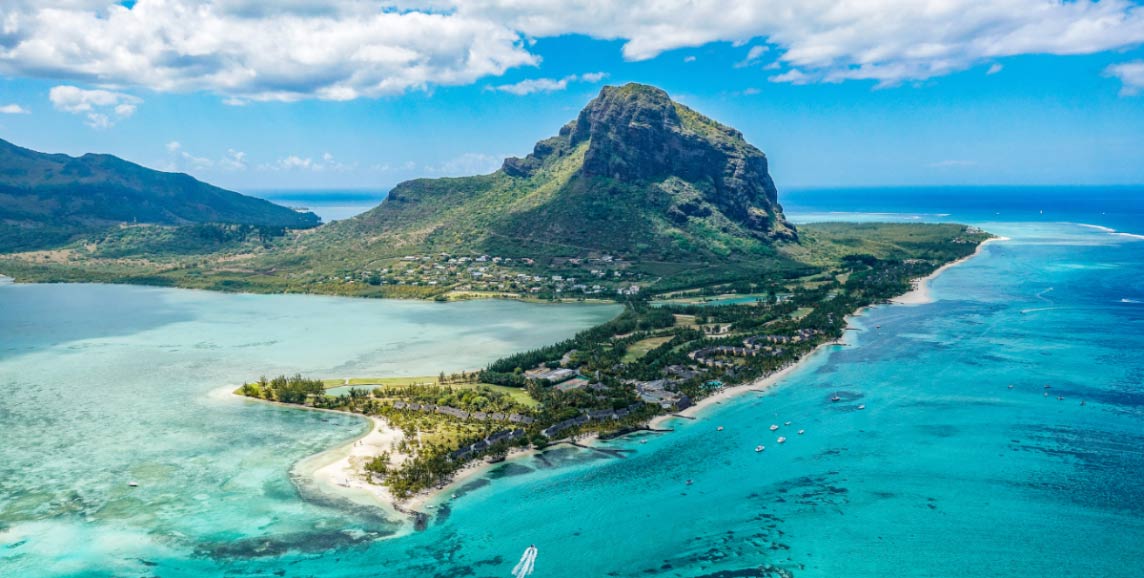 Mauritius ranks 55th
Africa's most consistent all-round improver over five years, with gains in press freedom, quality of life and democracy. Mauritius has ethical credentials that match its reputation for natural beauty.
 Fiji ranks 60th
Strong and improving sustainability scores, a solid democratic record and a genuine commitment to climate action make Fiji the Pacific's standout ethical destination.
These seven countries have posted significant numerical gains over five years. In most cases, those gains are real — sustainability investments are genuine, quality-of-life improvements are measurable, and some economic reforms have tangibly improved daily life. But those improvements sit alongside scores on press freedom, LGBT+ rights and democracy that remain among the worst in the world.
A composite index that weights all eight metrics equally will always surface this tension. We think travellers deserve to understand it — not just see a headline number.
The single biggest numerical climber in the entire index. Substantial investment in infrastructure, sustainability and quality of life has lifted Qatar's composite score significantly. But Qatar ranks among the world's worst performers on LGBT+ rights — same-sex relationships remain criminalised — and on press freedom. The 2022 World Cup brought intense international scrutiny of Qatar's human rights record. Five years of index data suggest that scrutiny has yet to produce meaningful change where it matters most.
Economic development and genuine sustainability commitments drive the headline number. But press freedom, democracy and LGBT+ rights scores remain close to the bottom of the global rankings. The UAE's rise is a story of selective progress.
Quality-of-life and sustainability improvements account for almost the entirety of Kuwait's five-year gain. Democracy and LGBT+ rights scores remain among the lowest in the index and haven't improved over the period.
The death penalty for same-sex relations remains on the statute book. Brunei's rise reflects genuine improvements in sustainability and quality of life. It doesn't reflect any meaningful improvement in human rights, and any traveller for whom everyone's safety is a consideration should understand that context clearly.
A more nuanced picture than some others in this tier, with some genuine quality-of-life progress. But the fundamental pattern holds: strong economic and sustainability metrics alongside deeply poor scores on rights and freedoms that have seen little substantive change.
Vision 2030 has produced real and measurable improvements in sustainability and quality-of-life metrics, along with some high-profile social reforms. It hasn't produced meaningful improvements in press freedom or LGBT+ rights, where criminalisation remains absolute.
The smallest numerical gain in this tier, but in some respects the most instructive. China's sustainability investments are substantial and its quality-of-life scores have improved. Its scores on democracy, press freedom and human freedom have moved in the opposite direction over the same period.
China's presence in this tier illustrates the core limitation of any composite index: a country can improve dramatically in one dimension while deteriorating sharply in another, and the composite score won't always tell you which story matters more.
We're transparent about what this tier reveals about our own methodology. An index that weights sustainability and quality of life equally alongside rights and freedoms will always risk presenting a partial picture of countries improving in some respects while remaining deeply problematic in others. That's precisely why we're naming it.
These destinations have fallen significantly in the Good Trips Index since 2022 — not because of statistical noise, but because of genuine ethical regression. Some remain accessible tourist destinations where travellers should exercise real caution. Others have deteriorated to the point where travel is inadvisable on ethical grounds alone, regardless of FCDO advice.
The most troubling reversal among European destinations. Following a change of government, Georgia has moved from a country with genuine reformist momentum to one where the active persecution of LGBT+ people is state policy. A destination that featured positively in earlier editions of this index now features in its warning list.
One of the clearest cases of democratic collapse in the dataset. President Ortega's government has systematically dismantled independent institutions, imprisoned political opponents and expelled critical NGOs. Nicaragua's fall of 38 places in five years is a direct reflection of that process.
The 2021 military coup reversed years of democratic progress. Myanmar's score has deteriorated across almost every metric since 2022, and the humanitarian situation continues to worsen. Travelling to Myanmar directly finances a military government responsible for widespread human rights abuses.
The single most dramatic deterioration in the entire index. A country ranked 98th in 2022 has fallen to 181st following successive military coups, the expulsion of UN peacekeepers and a near-total collapse of press freedom and democratic institutions. The scale of Mali's fall over five years is without parallel in the dataset.
A trajectory that closely mirrors Mali's, driven by the same pattern of military takeover and institutional collapse across the Sahel region.
A more complex and contested deterioration than others on this list. Kosovo remains a functioning democracy, but significant regression across multiple metrics since 2022 warrants careful monitoring.
Post-2022 conflict and political instability have reversed earlier gains. Armenia's fall reflects the fragility of democratic progress in contested regions.
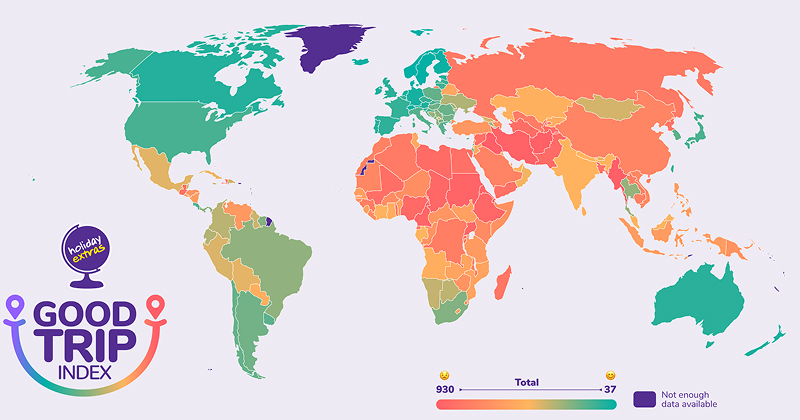
Now in its fifth year, the Good Trips Index ranks 183 countries across eight weighted measures: LGBT+ safety, press freedom, democracy, human freedom, animal welfare, quality of life, women's rights and sustainability. The index draws on internationally recognised third-party data sources, updated annually.
The full 2026 Good Trips Index — including interactive tools, country profiles and five-year trajectory data for all 183 countries — is available now.


The Holiday Extras app gives you instant access to your bookings, updates, and support—anytime, anywhere.

Sign up to our mailing list for more travel advice plus exclusive money-saving offers on your holiday extras!
No need to worry about your data, we take your privacy seriously.

