The Good Trip Index
The Holiday Extras guide to travelling ethically, sustainably and well. This is the Good Trip Index, updated for 2026.
We've helped UK holidaymakers have better trips everywhere. Here's 20 places for a better trip in 2027.
Short on time? Let us summarise this guide for you.
Chase wine country calm in Punta del Este and wild adventure in Chile's Aysén region, or catch the Alps mid transformation in Grenoble before the 2030 Olympics arrive. Find the most reliable happiness of any destination in the Canary Islands, then head north for value city pairs in Kraków and Gda?sk, regional Japan in Kanazawa and Shikoku, and an under the radar ski break in Trysil. Budapest and Pula bring city break and coastal charm, while Berlin's Pergamon Museum reopening gives you a reason to book early. Escape the summer heat in Greenland's Tasiilaq or Thassos's quieter shores, go properly off grid on the Silk Road in Turkistan and Shymkent, or slow right down in Belgium's Meuse Valley. New flight routes open up Bergerac and the Dordogne, while Albania's Sarandë proves overtourism has a counterpoint. Finish the year with Puglia's Amalfi coast dupe, Corfu's happiest shoulder season, Chiang Mai's lesser travelled Thailand, and a fairytale Christmas market in Ljubljana.
We know which destinations make you happiest, and where you report the most satisfaction with your trips. We know where you can have a holiday with a clear conscience, picking places that meet your own ethical standards for a Good Trip. We even know where in the world is looking for more visitors, and where they're full up.
Combine all that data with some 2027 trends and events too. Think the reopening of major museums, new routes from some great regional airports and a festival or two. Put it all together and you've got a recipe for a great holiday in 2027. If you've not decided where to go yet, let us give you a hand.

Uruguay has climbed our Good Trip Index for five years running, and 2027 looks like the year it breaks through properly. This one trip covers three completely different paces. Punta del Este brings beach club glamour and the wobbly Casapueblo hotel perched on the cliffs. Colonia del Sacramento, a UNESCO listed old town across the river from Buenos Aires, is all cobbled streets, colonial lamp posts and sunset views over the water. Then there's José Ignacio, the quiet one, where boutique wineries and low key beach restaurants are drawing serious attention from adventure travel operators planning 2027 itineraries. It's the kind of destination that lets you swap glamour for calm within an hour's drive, at a fraction of what a similar trip in the south of France would cost.
Our Happiness Index has crowned plenty of one hit wonders over the years, but the Canaries are different: they're the only destination to hold top tier scores across both waves of the survey, making them about as reliable a recommendation as we can give anyone. Gran Canaria packs desert dunes, mountain villages and a lively old town in Las Palmas into one island, while Lanzarote's volcanic craters at Timanfaya and César Manrique's whitewashed, cave inspired architecture give it a completely different character. Both islands hold their warmth and their sunshine hours steady through the winter, which is really the whole point: guaranteed good weather, short flights from the UK and a happiness score that's stayed consistently high, whichever wave of the survey you look at.
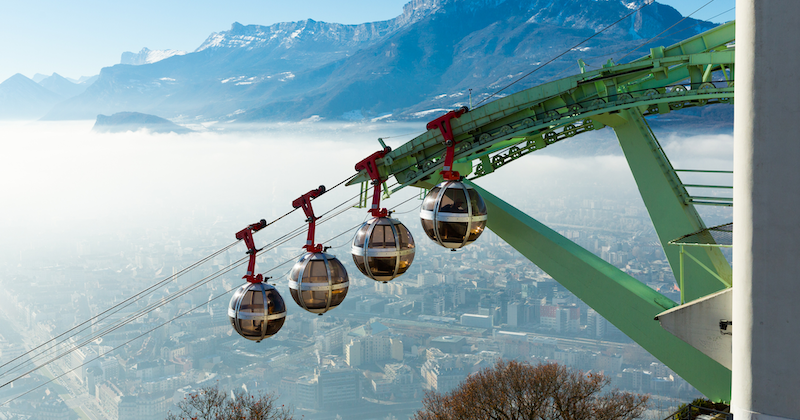
The single biggest riser of summer 2026, up 200 per cent year on year, and we don't expect that to slow down. Grenoble sits ringed by three mountain ranges, easily explored via the Bastille cable car that lifts you straight out of the old town and onto the hillside in minutes. Chambéry, its quieter neighbour, brings a proper medieval centre and the turquoise waters of Lake Bourget on its doorstep. Some of the rise is people escaping the summer heat for cooler Alpine air. Some of it is skiers scouting the slopes around Chamrousse and Les Deux Alpes that will host the 2030 Winter Olympics. Either way, this is a rare destination that works in both directions of the calendar, so book early whichever season you're after.
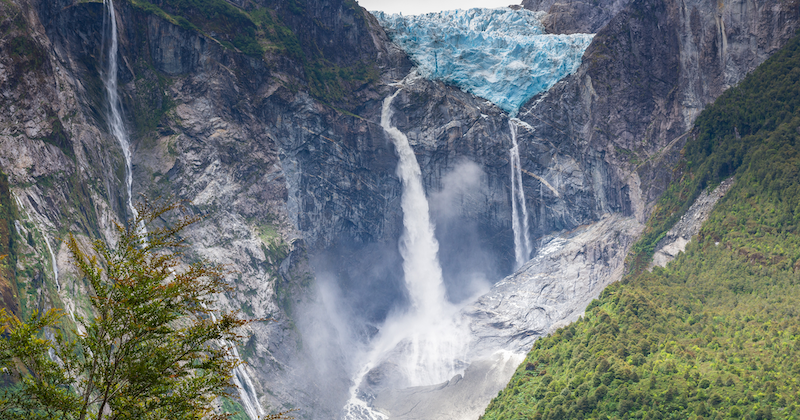
Skip the classic Chile itinerary and head south into Aysén instead. This is where the Carretera Austral properly earns its reputation, a mostly unpaved road that winds through fjords, temperate rainforest and glacier fed rivers with barely another car in sight. Kayak out to the marbled caves of General Carrera Lake, hike the granite spires of Cerro Castillo, or just watch condors circle over a valley you'll likely have entirely to yourself. Visitor numbers here are a fraction of what you'd find further north around Torres del Paine, which makes it the wilder, quieter alternative for travellers who've already ticked off Santiago and Patagonia's greatest hits and want the version with fewer coach parties.
Poland keeps climbing our Good Trip Index, and this pairing shows exactly why. Kraków's medieval square, Wawel Castle and the Kazimierz district's café culture make for one of Europe's best value city breaks, with the Wieliczka salt mine and its underground chapels an easy day trip out. Gdansk, a few hours north on the Baltic coast, trades castles for amber shops, a beautifully rebuilt old town and the shipyard history that shaped Poland's Solidarity movement. Together they give you two very different sides of the country, historic and coastal, for the price of a single flight, and the value for money is genuinely hard to beat anywhere else in Europe right now.
Our Happiness Index has a clear winner for the happiest city break, and it's Budapest. Spend mornings soaking in the thermal waters at Széchenyi Baths, afternoons wandering Buda Castle and the Fisherman's Bastion for river views, and evenings working through the ruin bars scattered across the old Jewish quarter. A sunset cruise down the Danube, past the lit up Parliament building, is the kind of thing that photographs well and lives up to the photographs. It's a city that rewards slow, wandering days as much as a packed itinerary, which is probably why it keeps coming out on top.
Japan scores higher than anywhere else on our Happiness Index, and travellers are increasingly skipping the Golden Route to find out why for themselves. Kanazawa's Kenrokuen Garden, preserved samurai quarter and gold leaf craft studios make it one of the country's most complete city breaks, while Shikoku, just south across the Seto Inland Sea, is the setting for the 88 temple pilgrimage and the wobbling vine bridges of the Iya Valley. Expect fewer crowds, warmer welcomes and a slower pace than Tokyo or Kyoto, without giving up any of the culture, food or scenery that makes Japan worth the flight in the first place.
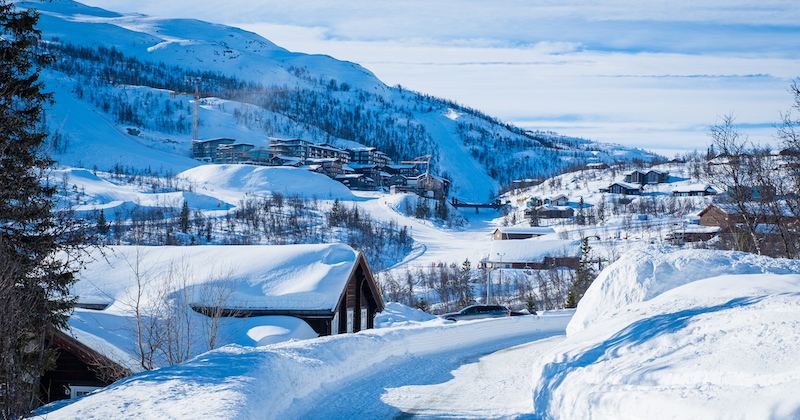
Everyone knows the big Alpine resorts. Fewer know Trysil, Norway's largest ski area, which holds snow into early April at a fraction of the price of its Alpine rivals. The terrain suits families and beginners as much as it does more confident skiers, with floodlit slopes for after dark runs and an easy switch to cross country trails if your legs need a rest from downhill. Add long saunas, frozen lakes and forest walks between runs, and it's less about big mountain thrills and more about a properly relaxed ski week. Consider it the ski dupe nobody's told you about yet, at least until the secret gets out.
As Dubrovnik works to limit overcrowding, inland Istria is where you'll find the warmest welcome in Croatia. Pula's Roman amphitheatre, one of the best preserved in the world, still hosts concerts in summer, while the hilltop town of Motovun sits above forests famous for truffle hunting tours you can actually book. Add Istria's own wine and olive oil trails, quieter coastal towns like Rovinj within easy reach, and a noticeably slower pace than the Dalmatian coast, and you've got all the charm of Croatia with none of the queues.
The Pergamon Museum reopens in June 2027 after years behind scaffolding, and on its own that's reason enough to book a city break around it. Its ancient Babylonian and Greek reconstructions are some of the most striking anywhere in Europe, and it sits on Museum Island alongside four other major collections, so you can easily fill a couple of days without leaving the block. Beyond the reopening, Berlin's usual draws are all still there: the Brandenburg Gate, the East Side Gallery's stretch of preserved Wall, and a food and nightlife scene that runs well past midnight. Get there for the reopening and you'll beat the queues that are certain to follow once word gets out.

Improving airport infrastructure is finally opening up Greenland's nearer east coast to travellers who aren't on an expedition cruise, and Tasiilaq is where that shift is most obvious. Icebergs drift past the town's colourful wooden houses, dog sledding and hiking routes head straight out into the fjords, and nearby Inuit settlements offer a genuinely different pace of life to almost anywhere else in the Arctic. It's raw, remote and about as far from a package holiday as travel gets, which is exactly the appeal. Greenland doesn't yet appear as its own entry on our Good Trip Index, so this one's a trend call rather than a ranked pick, but it's a call we're confident about.
A new Jet2 route from Manchester lands in summer 2027, opening up the northern Aegean's quietest, coolest island to direct flights for the first time in a while. Thassos packs pine forested mountains, marble beaches like Saliara and the natural rock pool at Giola, and a genuinely ancient old town built around ruins that most visitors to the bigger islands never see, into a much smaller and much calmer package. Think everything you love about Crete, Rhodes or Corfu: good food, warm seas, plenty of history, minus the crowds and the queues for sunbeds.
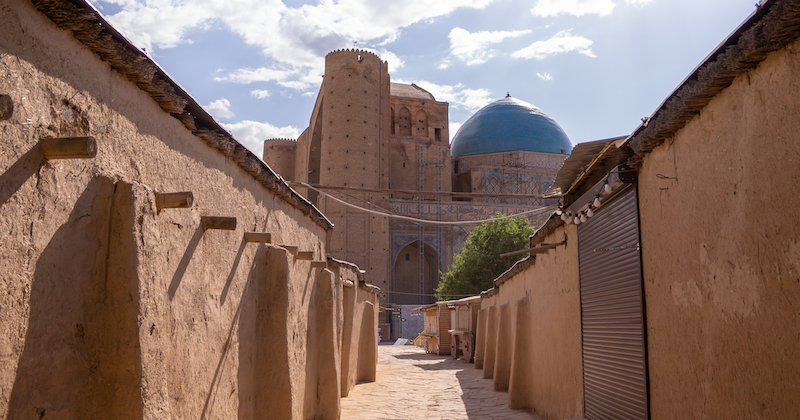
Expanding Silk Road tourism links are making this pairing quietly easier to reach every year. Turkistan's centrepiece is the Mausoleum of Khoja Ahmed Yasawi, a vast UNESCO listed shrine that's one of the best preserved pieces of Timurid architecture anywhere, while Shymkent, the region's biggest city, gives you sprawling bazaars and a genuinely warm welcome for a destination that still sees only a trickle of British visitors. New high speed rail is due to connect the city to the rest of the country next year, which will only make this easier. For now, it's proper adventure territory while it lasts.
French speaking Belgium beyond Bruges and Ghent finally gets its moment. Namur and Dinant both sit beneath dramatic riverside citadels overlooking the Meuse, with cycling and walking routes threading along the water and up into the Ardennes forest behind them. Heritage rail investment is opening up more of the valley, and the caves at Han sur Lesse are an easy detour if you want somewhere properly cool on a hot day. It's reachable by Eurostar for a great late summer break, and it moves at a noticeably gentler pace than the country's better known cities.
New routes from Bristol, Birmingham and Manchester are increasing regional UK capacity into this region fivefold in 2027, and it's easy to see why the demand is there. The Dordogne is chateau country, with clifftop fortresses like Beynac and Castelnau overlooking a river made for slow canoeing days, and the medieval market town of Sarlat is one of the best preserved in France. Bergerac itself gives its name to a respected wine region, and the local food, think duck, walnuts and truffles, is reason enough on its own. What used to mean a long drive from somewhere else is suddenly a direct flight away.
While the Mediterranean's big names look at ways to cap visitor numbers, Albania is doing the opposite, and Sarandë is the growth story to watch. The town looks straight across the water to Corfu, with beaches at nearby Ksamil that regularly get compared to the Caribbean, and the Roman and Byzantine ruins at Butrint, a UNESCO World Heritage site, are a short drive away. Prices are still a fraction of the Greek islands opposite, the coastline is every bit as dramatic, and it's the clearest counterpoint going to overtourism elsewhere on this stretch of coast.

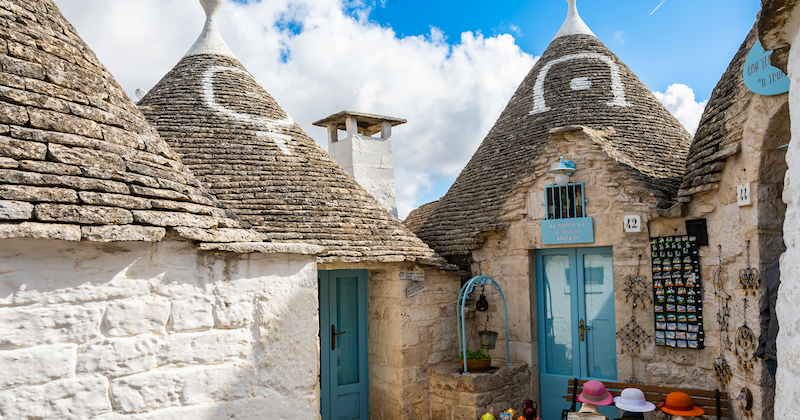
Puglia's trulli towns and Adriatic coast are having a genuine social media moment right now, as people discover Italy's answer to the Amalfi coast. Alberobello's whitewashed, cone roofed trulli houses are the picture everyone's after, while baroque Lecce and centuries old olive groves give the region proper depth beyond the photos. The coastline itself runs from dramatic limestone cliffs to soft white sand, and the food, orecchiette, burrata, olive oil that rarely leaves the region, is some of the best in Italy. Same drama as the Amalfi coast, similar beauty, and still, for now, far fewer crowds.
Corfu holds the highest score across both waves of our Happiness Index, and shoulder season weather here in October is still warm enough to make the most of it. The Venetian influenced Old Town is a UNESCO World Heritage Site in its own right, all narrow lanes and pastel buildings, while Paleokastritsa's cliffs and coves on the west coast are some of the most striking scenery in the Ionian. Add the slightly eccentric Achilleion Palace and a food scene with more Italian influence than most Greek islands, and it's easy to see why it keeps coming out on top.
A genuine climber on our Good Trip Index, and the trend makes sense once you look at Phuket's continued rise following marriage equality: travellers are following the same instinct and skipping the capital to fly straight into Thailand's lesser travelled corners. Chiang Mai brings hilltop temples like Doi Suthep, sprawling night markets and ethical elephant sanctuaries that have moved firmly away from riding. Khao Sok, further south, is ancient rainforest and limestone karsts rising straight out of the emerald waters of Cheow Lan Lake, with floating raft houses for nights that feel properly off grid. Two very different sides of Thailand, both a long way from the beach resorts most visitors default to.
A confirmed riser through summer 2026 with a strong Good Trip Index rank, Ljubljana is your way into Eastern Europe without the crowds of Prague or Budapest. The old town wraps around a castle topped hill, cafes line the river beneath the dragon guarded bridges, and Lake Bled is an easy day trip if you want an alpine detour. Come December, the Christmas market transforms the riverside into one of Europe's more underrated festive scenes, all fairy lights and mulled wine without the elbow to elbow crowds of the bigger markets. Its Christmas market alone is worth the trip.


The Holiday Extras app gives you instant access to your bookings, updates, and support—anytime, anywhere.

Sign up to our mailing list for more travel advice plus exclusive money-saving offers on your holiday extras!
No need to worry about your data, we take your privacy seriously.

