How to turn 27 days' leave into 61 days.
Don't tell your boss but we're here to maximise your annual leave in 2026.
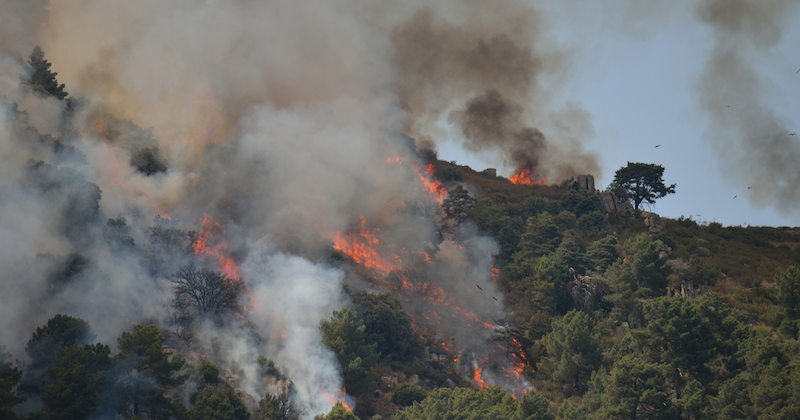
First, the honest context: this is a humanitarian and climate disaster for the people whose homes and towns are in the path of the fires. For anyone with a holiday booked, here's the practical picture : where the fires are, what the FCDO actually says, and your rights if things change.
Short on time? Let us summarise this guide for you.
The picture has shifted since this guide first went up. In France, the main Gironde fire, having burned around 42,000 hectares over nine days, was declared contained on 1 August, and evacuation zones are being progressively eased, though officials are keeping a close watch given how dry conditions remain. In Spain, the Madrid and Ávila fires that triggered the country's first-ever national wildfire emergency are now under control, with most evacuees back home; newer, smaller fires in Cáceres and Castellón have also been brought under control, and Spain has now burned around 186,500 hectares nationwide so far this year. The most serious current danger has moved to Greece, where gale-force winds have driven a major fire deeper into the Athens region, forcing fresh evacuations west of the capital near Megara, and where two firefighting helicopter crew members, one Greek and one Danish, tragically died in a mid-air collision on 2 August while tackling the blaze. Earlier fires on Crete, Paros and Lesbos have largely stabilised, and most Greek islands and mainland resorts remain unaffected. Crucially, the FCDO has still not advised against travel to any part of France, Spain or Greece, which is the key test most airlines, tour operators and insurers work from. Popular coastal destinations including the Costa del Sol, Costa Blanca, the Balearics, the Canaries, Rhodes and Corfu remain well away from the fire zones and are operating normally. Travellers heading to, or already in, an affected region should follow local authority instructions, keep 112 to hand, and check with their accommodation or transport provider directly. Refund and insurance rights depend heavily on individual policy wording and whether official advice changes, so it's worth checking both before assuming a trip needs to be cancelled.
Wildfires driven by a prolonged heatwave and drought swept across south-west France and central Spain from mid-July, forcing what French officials described as one of the country's largest peacetime evacuations, in what became France's worst wildfire season on record. The main fire, in the Gironde department around the Arcachon Basin west of Bordeaux, including the towns of Lège-Cap-Ferret, Le Porge, Saumos and Lacanau, burned around 42,000 hectares over nine days before being declared contained by France's interior minister on 1 August, meaning it is no longer spreading, though it isn't yet fully extinguished. A smaller fire near Biscarrosse in the neighbouring Landes department was contained earlier still. Evacuation zones across both departments are being progressively eased as containment holds, though authorities are keeping the area under close watch given how dry the ground remains.
In Spain, the fires that triggered the government's first-ever national emergency for wildfires, centred on the Madrid region and neighbouring Ávila where blazes near San Martín de Valdeiglesias and Burgohondo had merged into larger fronts covering more than 70,000 hectares, are now under control, and the great majority of the roughly 63,000 people evacuated across the Madrid region have returned home. Since then, smaller new fires have flared elsewhere in the country: a lorry fire on the A-66 motorway in Cáceres led to the brief precautionary evacuation of around 800 residents in Grimaldo and Casas de Millán, who were allowed home the next day, while a longer-running fire in Vall d'Uixó, in the eastern region of Castellón, was stabilised on its seventh day after burning 9,568 hectares, with evacuated residents now rehoused. Taken together, Spain has burned around 186,500 hectares nationwide so far in 2026, according to provisional government figures.
The heatwave that intensified fire conditions in France and Spain through late July has eased, though hot, dry conditions persist in both countries and officials are cautioning against complacency while the ground remains tinder-dry. Face masks were distributed in parts of France affected by smoke and air pollution while the Gironde fire was active.
Greece's situation, by contrast, has escalated. Dozens of fires broke out across the country in late July, fanned by strong winds and weeks of hot, dry weather, and while earlier blazes on Crete, Paros and Lesbos have largely stabilised, a serious new fire has since developed west of Athens, near Porto Germeno and Megara, apparently sparked by a fault on a power line connecting a wind generator to the electricity network. Gale-force winds have driven the flames deeper into the Attica region, threatening communities and an industrial district and forcing fresh evacuations, while the same winds have made it difficult for firefighting aircraft to draw water from the sea. Tragically, two firefighting helicopter crew members, one Greek and one Danish, died when their aircraft collided while tackling the blaze on 2 August. Category 4, "very high," fire-risk warnings remain in place for Attica, Evia, the Peloponnese, the Cyclades and Crete.
Together, the fires have displaced hundreds of thousands of people across all three countries and have tragically claimed lives, including firefighters and helicopter crew who have died tackling the blazes. It's a genuinely difficult moment for the communities affected, and it's worth holding that in mind alongside the practical planning questions below.
Here's the important context for travellers: the fires are geographically specific. They're concentrated in particular inland departments, provinces and, in Greece's case right now, one part of the mainland near Athens, not spread evenly across any of the three countries. The Spanish coast and islands, the vast majority of France, and the great majority of Greece's islands and mainland are entirely unaffected and operating as normal.
The Foreign, Commonwealth & Development Office (FCDO) is the official source of UK travel advice. This is what it currently says for the areas most relevant to UK holidaymakers. Last checked: 3 August 2026. Check the live FCDO advice here.
Important: This list reflects FCDO advice at the date above. Conditions are changing quickly, particularly in the Athens area, so always check gov.uk/foreign-travel-advice again close to your departure date : and bookmark it now.
It's understandable to want to know whether it's "safe" to travel, but the most useful practical measure isn't a headline, it's the FCDO's official advice for your destination. This matters because it's the benchmark that airlines, tour operators and most insurers use to decide what your rights are.
As things stand, the FCDO has not advised against travel to any part of France, Spain or Greece, including the areas affected by the fires. That's a meaningful distinction: it's the difference between "proceed with care" and "don't go." What it has done is add specific, practical guidance for all three countries:
It's also worth knowing that, separate from the FCDO, some local authorities are going further. Greek authorities have issued Category 4 "very high" fire-risk warnings for Attica and several other regions this week. That's a useful extra data point if your trip takes you into one of those specific areas, even though it doesn't change your legal rights under UK travel rules in the way an FCDO advisory would.
Because national FCDO advice hasn't tipped into "avoid travel," most of the automatic refund protections that hinge on a government warning won't currently apply. That's not a comment on how serious things are on the ground, just on how the system is built. It's also worth remembering the FCDO's own caveat that no travel can ever be guaranteed completely safe, and that its advice can and does change quickly, so check again close to departure.
Whether you're covered, and for what, depends heavily on the details, but here's the plain-English version of the main protections.
Under UK261, if your airline cancels your flight, for any reason, you're entitled to either a full refund or an alternative flight to your destination. Delays and cancellations caused by extreme weather or safety-related airport restrictions are usually treated as "extraordinary circumstances," which means you're unlikely to be entitled to additional cash compensation, but your ticket cost itself is protected.
If your accommodation sits inside an evacuation zone, or has been forced to close, you should be entitled to alternative accommodation or a refund, since the provider can't fulfil the booking. If you're booked somewhere near, but not inside, an affected area, that's less automatic, so contact your provider directly to ask about your options.
If your booking combines flights and accommodation (or other services) for one price from one provider, you have stronger protections under the Package Travel Regulations 2018. These are triggered most clearly if the FCDO formally advises against travel to your destination before you depart. Short of that, your operator's own flexible booking or rebooking policy is likely to be the relevant one, so it's worth checking what they're currently offering for affected departments and regions.
Unless you're due to travel imminently and your destination is in a currently affected area, it's worth waiting rather than cancelling straight away. Insurers generally won't pay out for a change of heart, and cancelling early can forfeit a refund or rebooking option you might otherwise get closer to your departure date. Travel companies tend to prioritise anyone due to depart in the next day or two, so there's usually little to lose by waiting a little longer to see how things develop.
If your trip takes you anywhere near Gironde, Landes, Madrid, Ávila or, currently the highest-risk area, Athens and Attica, a few sensible habits will make a real difference:
If you're travelling anywhere in southern Europe more generally this summer, it's also worth knowing that France, Spain and Greece all carry a standing high wildfire risk through the summer season, roughly April to October, regardless of this particular event.
This isn't happening in isolation. The area burned by wildfires across Europe has increased significantly since 2022, and the pattern is consistent with hotter, drier summers linked to climate change. France's interior minister has described this year's toll as far greater than anything seen in recent years, and EU officials have warned that the risk is now shifting eastward, with Greece bearing the brunt this week and Italy expected to face its own elevated risk from early August. It's a trend worth being aware of for future summer planning, even if it doesn't change the practical advice for a trip you've already booked. For now, the most useful thing any UK traveller can do is check the official advice, stay in contact with their provider, and keep a bit of flexibility in their plans, while keeping some perspective on the much harder few weeks this has been for the people, and the firefighters and aircrew, working to bring these fires under control.
For the vast majority of UK holidaymakers with trips to France, Spain or Greece this summer, nothing needs to change. The main fires in France and Spain are now contained or under control, the most active front has shifted to the Athens area in Greece, driven by strong winds rather than heat, and the FCDO has not advised against travel anywhere in any of the three countries, with most of the coast and islands across all three entirely unaffected. If your trip does take you near Gironde, Landes, Madrid, Ávila or Athens and Attica, the advice is simple: follow local authorities, keep your provider in the loop, and check your policy before assuming either way. We'll keep this page updated as the situation develops.


The Holiday Extras app gives you instant access to your bookings, updates, and support—anytime, anywhere.

Sign up to our mailing list for more travel advice plus exclusive money-saving offers on your holiday extras!
No need to worry about your data, we take your privacy seriously.

